The United States is known for having one of the strongest economies in the world. However, economic prosperity is not evenly distributed across all states. Some regions continue to face significant financial challenges due to factors such as limited job opportunities, rural populations, lower wages, and declining industries. Understanding the 10 Poorest States in the United States in 2026 provides insight into the economic disparities that still exist across the country.
Several indicators are used to determine the poorest states, including median household income, poverty rate, unemployment levels, and economic growth. States that consistently rank lower in these areas often face long-term structural challenges that affect their economic stability.
Below is a detailed list of the 10 Poorest States in the United States in 2026.
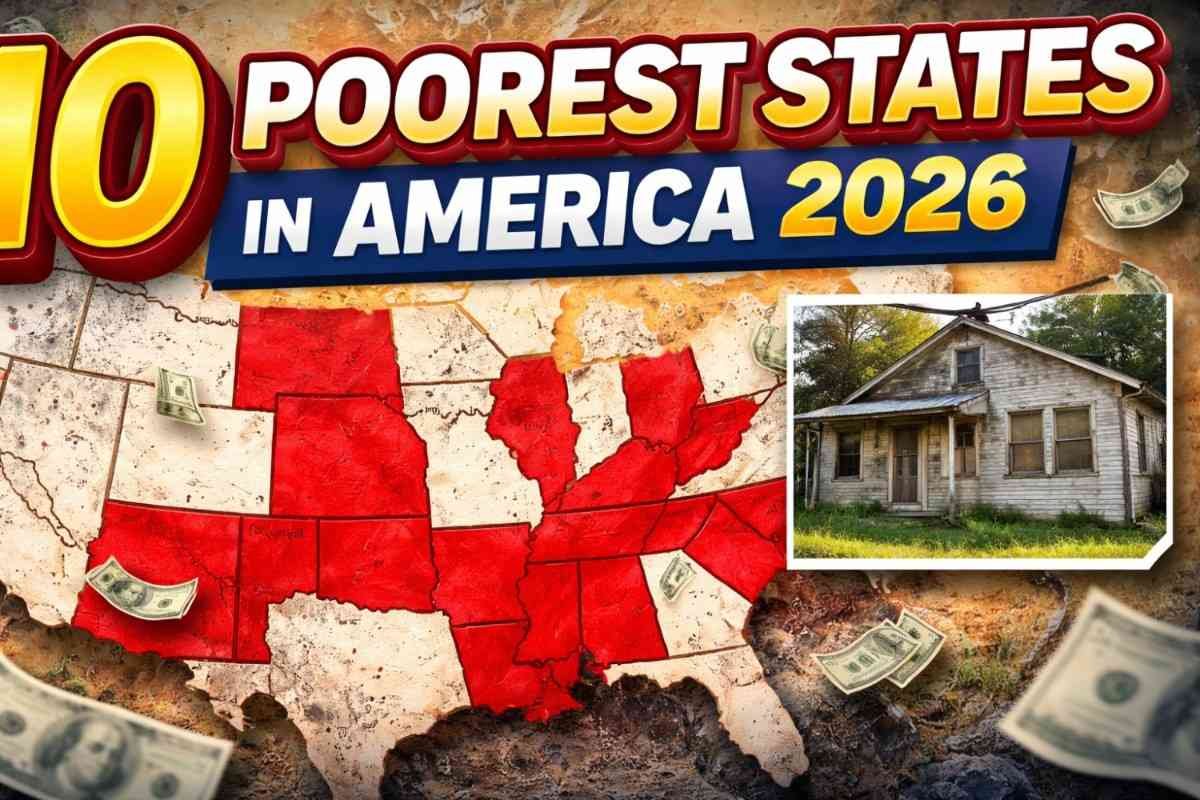
List of the 10 Poorest States in the United States in 2026
- Mississippi
- West Virginia
- Louisiana
- New Mexico
- Arkansas
- Alabama
- Kentucky
- South Carolina
- Oklahoma
- Nevada
Now, let’s take a closer look at each of these states and the reasons why they rank among the poorest in the country.
1. Mississippi
Mississippi continues to rank as the poorest state in the United States in 2026. The state has one of the lowest median household incomes and one of the highest poverty rates in the country.
A large portion of Mississippi’s population lives in rural communities where job opportunities are limited. Many residents work in agriculture, manufacturing, and service industries that generally offer lower wages. Education and healthcare access also remain challenges in many parts of the state.
However, Mississippi has been working to improve its economy by investing in manufacturing, logistics, and infrastructure projects.
2. West Virginia
West Virginia has long struggled with economic difficulties, largely due to the decline of the coal industry. For decades, coal mining was the backbone of the state’s economy, but the industry has significantly declined.
This shift has resulted in job losses and limited economic growth in many communities. West Virginia also has one of the oldest populations in the United States, which affects workforce participation.
The state is attempting to diversify its economy through tourism, outdoor recreation, technology initiatives, and renewable energy development.
3. Louisiana
Louisiana ranks among the poorest states in 2026 due to persistent poverty and income inequality.
Although the state has strong industries such as oil and gas production, shipping, tourism, and agriculture, wealth is not evenly distributed across the population. Rural communities often struggle with unemployment and limited economic opportunities.
Natural disasters, especially hurricanes, have also disrupted economic growth in several regions of Louisiana over the years.
4. New Mexico
New Mexico faces ongoing economic challenges despite having valuable industries such as energy production, defense, tourism, and film production.
Many communities in New Mexico are located in remote or rural areas, making it harder for residents to access high-paying jobs and quality education. The state also has one of the higher poverty rates in the country.
However, investments in renewable energy and technology industries are helping to create new opportunities for economic growth.
5. Arkansas
Arkansas is another state that ranks among the poorest in the United States in 2026. While Arkansas is home to several major corporations and has a strong agricultural sector, many rural communities still struggle with low wages and limited job opportunities.
Agriculture, poultry production, and manufacturing play major roles in the state’s economy. However, these industries often provide lower wages compared to sectors like technology or finance.
In recent years, Arkansas has focused on expanding manufacturing and logistics industries to improve economic conditions.
6. Alabama
Alabama has made economic progress in recent years but still ranks among the poorest states in the country.
The state has successfully attracted major manufacturing companies, particularly in the automotive and aerospace industries. Cities like Birmingham and Huntsville have experienced economic growth and technological development.
However, many rural areas still face high poverty rates and limited access to education and healthcare, which keeps the state’s overall income levels relatively low.
7. Kentucky
Kentucky remains on the list of the poorest states in 2026 due to economic challenges related to declining traditional industries.
The coal mining industry once provided thousands of jobs in Kentucky, but its decline has led to economic struggles in many communities. Additionally, certain regions of the state face limited job opportunities and lower education levels.
Kentucky has been working to strengthen its economy by expanding healthcare, manufacturing, and logistics sectors.
8. South Carolina
South Carolina has experienced rapid economic growth in some regions but still ranks among the poorer states overall.
Coastal cities and tourism destinations have seen increased investment and development. However, many rural areas inland continue to struggle with lower household incomes and higher poverty rates.
The state government has been focusing on infrastructure improvements, education, and industrial development to boost economic opportunities.
9. Oklahoma
Oklahoma is heavily dependent on the energy industry, particularly oil and natural gas production. While this sector can generate significant revenue, it also creates economic instability when energy prices fluctuate.
As a result, economic conditions in Oklahoma can change rapidly. Many rural communities face limited job opportunities outside the energy sector.
To improve economic stability, Oklahoma has been expanding industries such as aviation, biotechnology, and renewable energy.
10. Nevada
Nevada rounds out the list of the 10 Poorest States in the United States in 2026.
The state is well known for its tourism and entertainment industry, particularly in cities like Las Vegas. While tourism generates significant revenue, many jobs in the hospitality and service sectors offer relatively low wages.
Nevada also experienced economic disruptions during global travel slowdowns, which impacted employment levels. However, the state is working to diversify its economy by investing in technology, logistics, and renewable energy industries.
Key Reasons These States Rank Among the Poorest
1. Rural Populations
Many of these states have large rural populations where job opportunities are limited.
2. Declining Traditional Industries
Industries such as coal mining and agriculture have declined or offer lower wages compared to modern sectors.
3. Education and Workforce Challenges
Lower education levels can limit access to higher-paying jobs.
4. Infrastructure and Investment Gaps
Limited infrastructure and business investment can slow economic growth in certain regions.
Conclusion
The 10 Poorest States in the United States in 2026 highlight the economic disparities that still exist across the nation. States like Mississippi, West Virginia, and Louisiana continue to face challenges related to poverty, employment opportunities, and economic development.
However, many of these states are actively working to improve their economies through education, infrastructure development, and investments in new industries. With continued efforts and strategic planning, these regions may experience stronger economic growth and improved living standards in the future.